Custom printed
folding carton types.
Compare six paperboard carton structures by closure, packing method and product use. Every finished size and specification is made to order.
Which carton style should I choose?
The best folding carton structure depends on more than the product dimensions. Weight, fragility, packing speed, display orientation, opening sequence and required print area all affect the decision.
Begin with the closest format below, then use the carton brief to identify board, caliper, dieline and finish. If you are comparing the first two formats, use the straight versus reverse tuck end guide. If none is quite right, a bespoke folding carton can combine the most useful features.
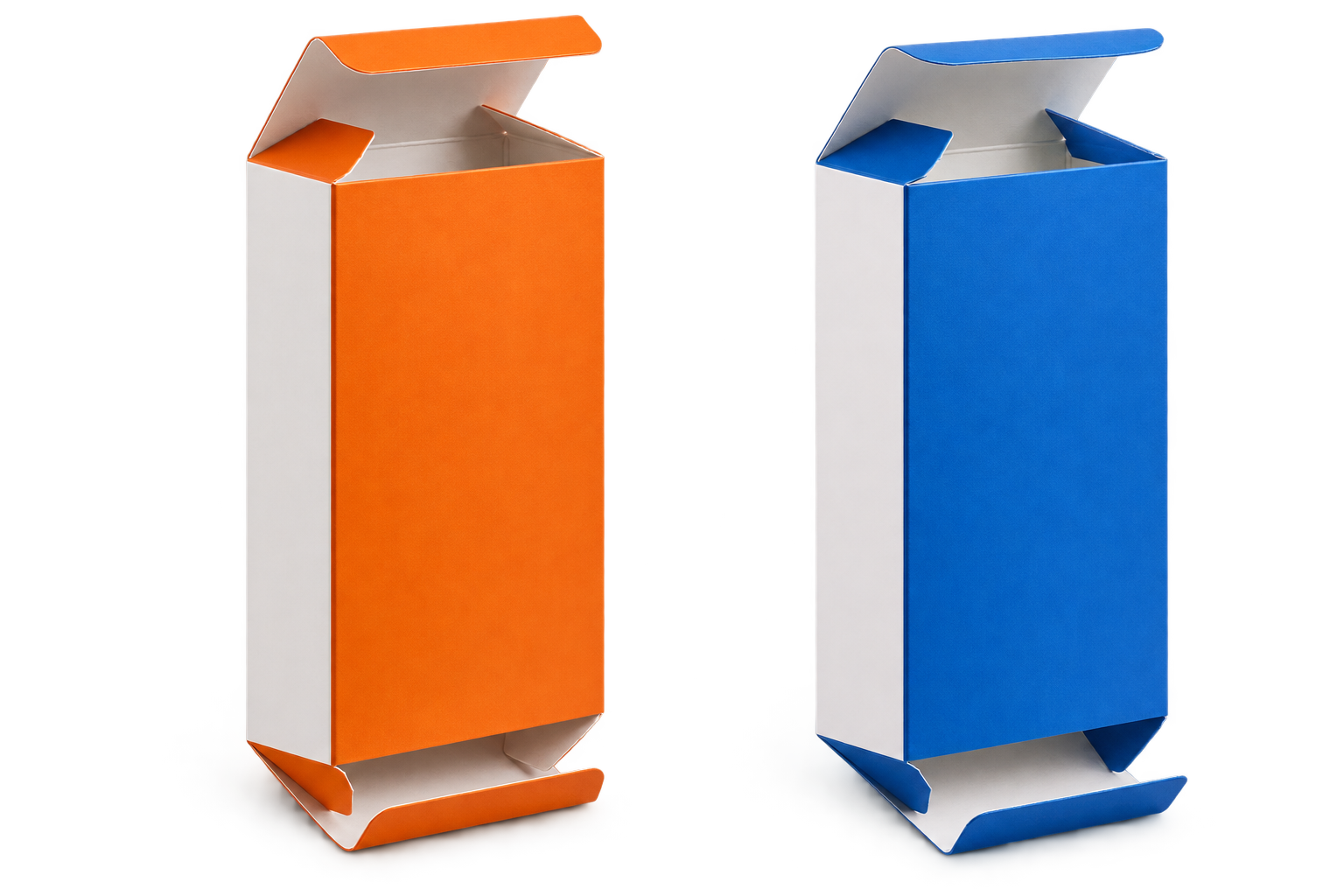
Straight tuck end
A clean, familiar paperboard carton with top and base closures folding in the same direction.
View carton ↗Reverse tuck end
A production-efficient folding carton with top and base tuck flaps closing in opposite directions.
View carton ↗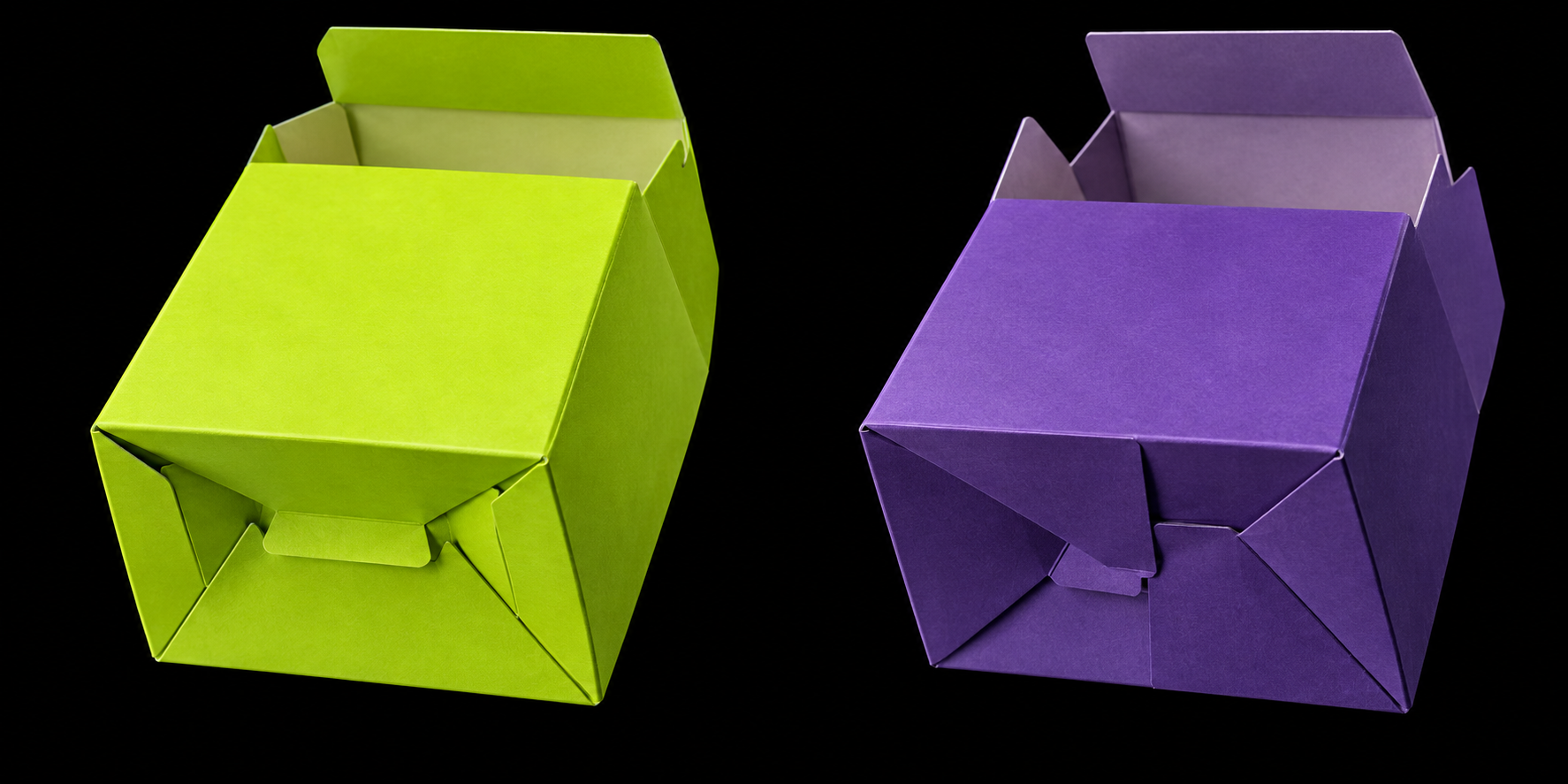
Crash-lock bottom
A fast-erecting carton with a pre-glued automatic base for efficient packing and added support.
View carton ↗Snap-lock bottom
An interlocking-base carton assembled in sequence for dependable support without a pre-glued base.
View carton ↗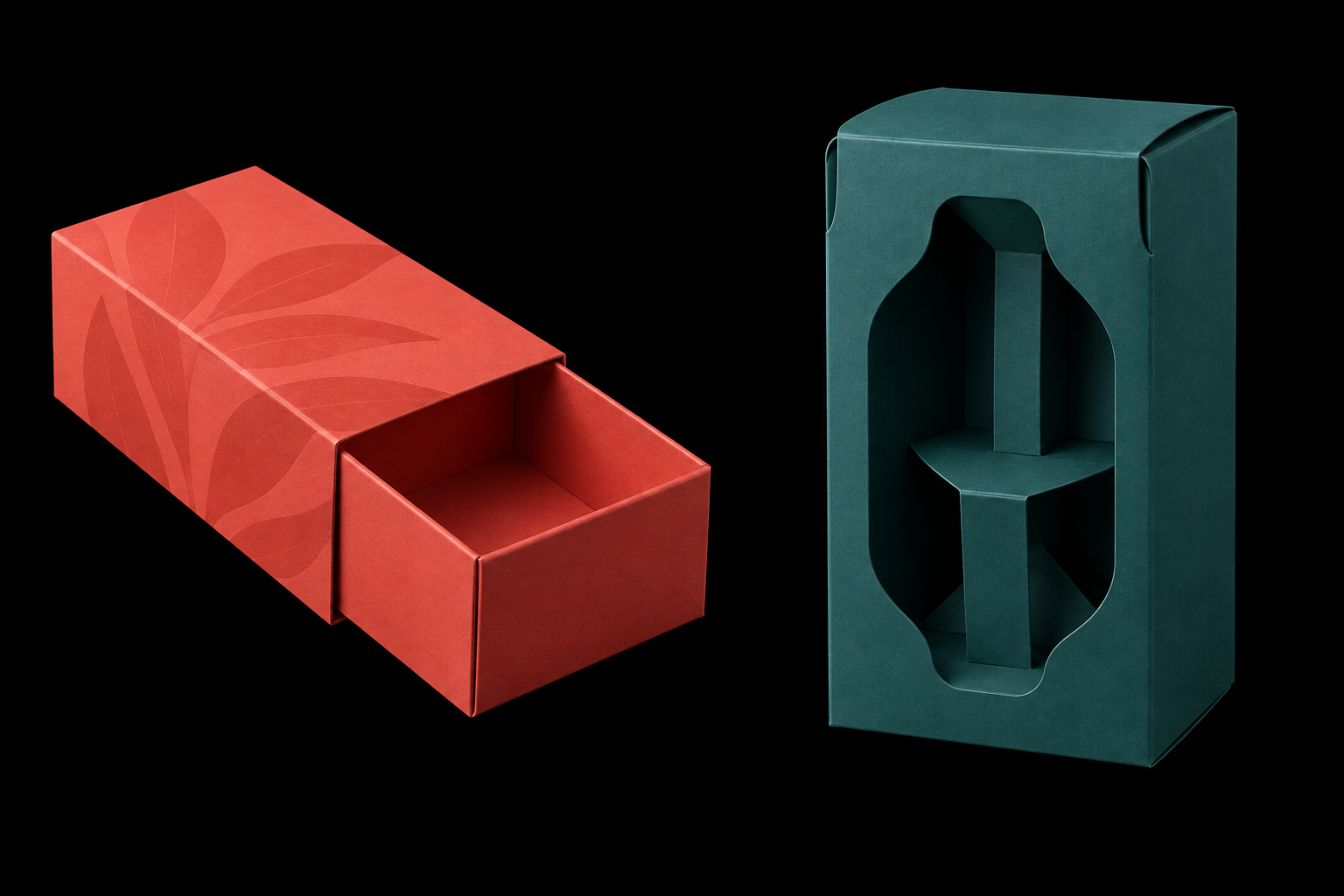
Sleeve & tray
A two-part sliding paperboard format that creates a deliberate reveal and strong presentation area.
View carton ↗Bespoke cartons
A product-specific carton engineered around dimensions, protection, packing method and presentation.
View carton ↗