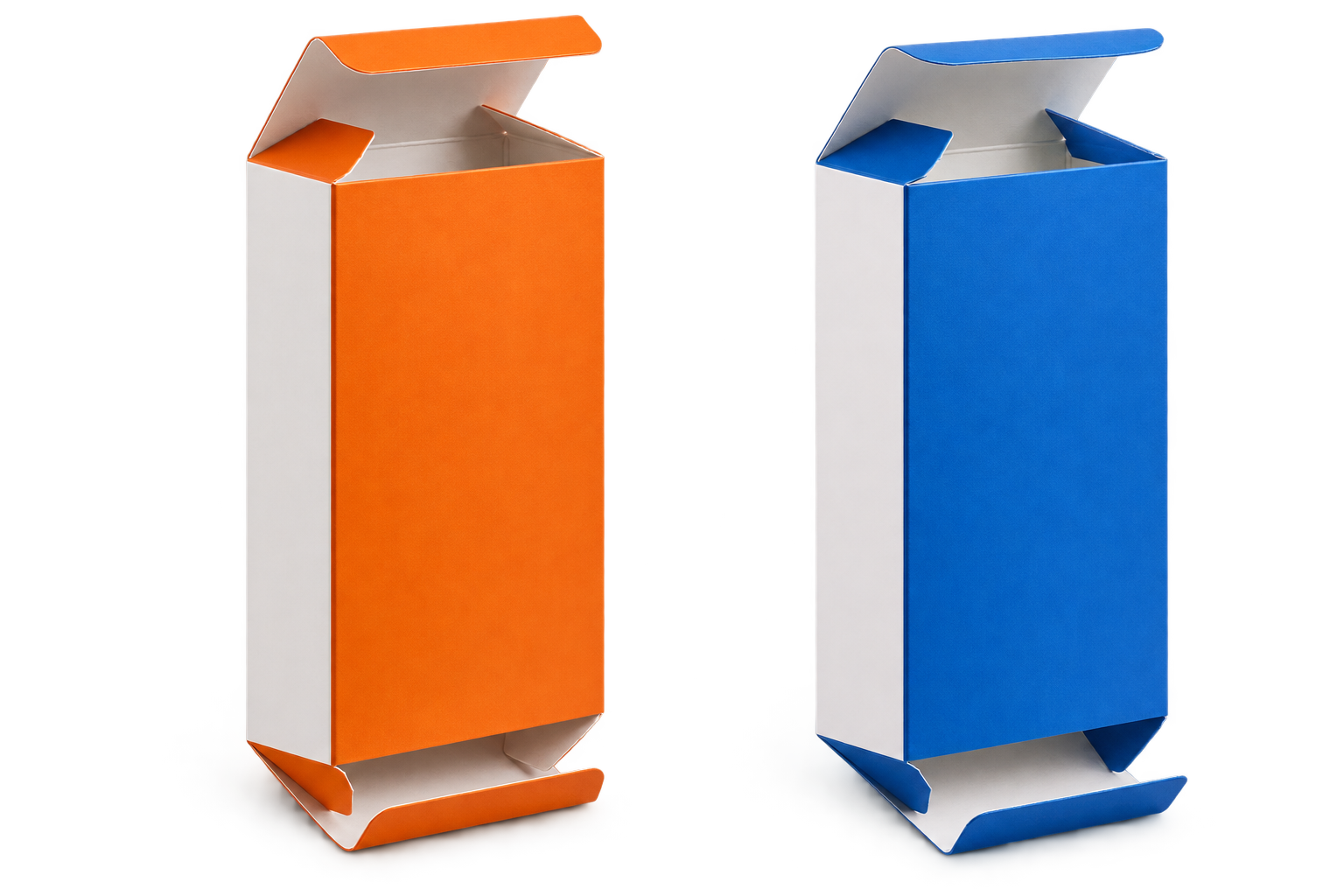
Printed outer sleeve
A wraparound surface provides uninterrupted space for brand graphics, foil, tactile detail and product information.
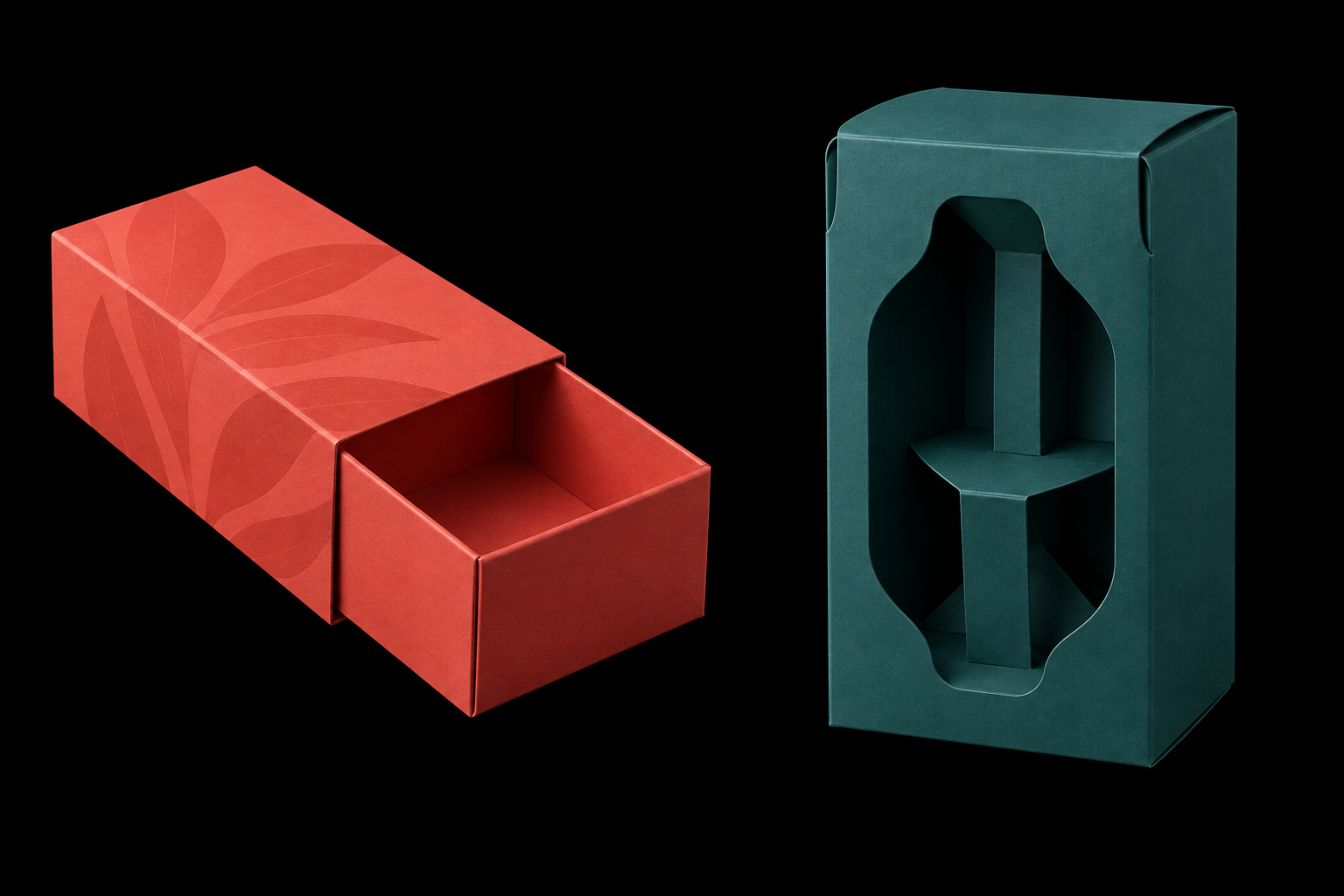
Sleeve and tray cartons create a more considered opening moment than a standard tuck box. The printed outer sleeve carries the brand story while the internal tray presents and protects the product, making the format well suited to gift sets, beauty, fragrance and premium retail.
A two-part sliding paperboard format that creates a deliberate reveal and strong presentation area.
This format separates the pack into a printed outer sleeve and an internal sliding tray. The sleeve controls the first brand impression; the tray controls product fit, organisation and reveal. Sliding clearance is a critical part of the dieline because board thickness, surface finish and packed weight all influence how smoothly the two components move.
A wraparound surface provides uninterrupted space for brand graphics, foil, tactile detail and product information.
The tray carries the product and can be folded, glued or combined with a fitment according to the load.
Small dimensional allowances between sleeve and tray determine whether the pack feels precise rather than tight or loose.
The box style, board, product and packing process need to work together. These are the advantages to use—and the points to verify before production.
The sliding action creates an intentional, tactile unboxing sequence.
Separate sleeve and tray surfaces allow contrast in colour, board and finish.
Internal fitments can organise multi-part products and improve presentation.
Prototype the packed format to confirm sliding friction after print, lamination and finishing are applied.
Decide how far the tray should pull out and whether a stop, thumb notch or pull feature is needed.
Calculate product support separately from visual presentation, especially for glass, sets and fragile components.
Include the additional hand-assembly and packing steps when assessing the format against a tuck carton.
Gift sets, beauty, fragrance and presentation packs. Final suitability is confirmed against the packed product and distribution route.
Stiffness, print response, fold performance and product weight shape the material decision. These are the most relevant starting routes for this structure—not fixed specifications.
Supports accurate sleeve folds, crisp edges and strong colour reproduction at a relatively light weight.
Useful where the tray interior is visible and a consistent clean-white appearance is important.
Different sleeve and tray stocks can create a deliberate reveal, subject to fit and surface testing.
Product-specific combinations to evaluate before opening the complete interactive library.
The uninterrupted outer wrap gives metallic branding room to work across a controlled focal area.
Tactile detail can strengthen the opening ritual when it stays clear of folds and sliding contact.
Creates a refined hand feel but must be tested for rubbing and sleeve-to-tray friction.
Can reveal the tray or product while maintaining enough sleeve integrity for repeated movement.
Click through premium finishing and structural add-ons for sleeve & tray cartons. Each option shows the visual character, best use and production point to resolve before artwork approval.
Gold and silver foil are shown separately. Foiling is also available in a wide choice of metallic and pigment colours, subject to the selected foil range and stock.

Warm metallic reflection
A heated die transfers gold-coloured foil onto selected artwork, creating a crisp reflective focal point without printing an additional ink colour.
A screen can suggest colour and surface, but fit, fold and finish should be judged against the actual structure. For a sleeve & tray carton, the approval route can include a plain prototype, printed sample or finish reference.
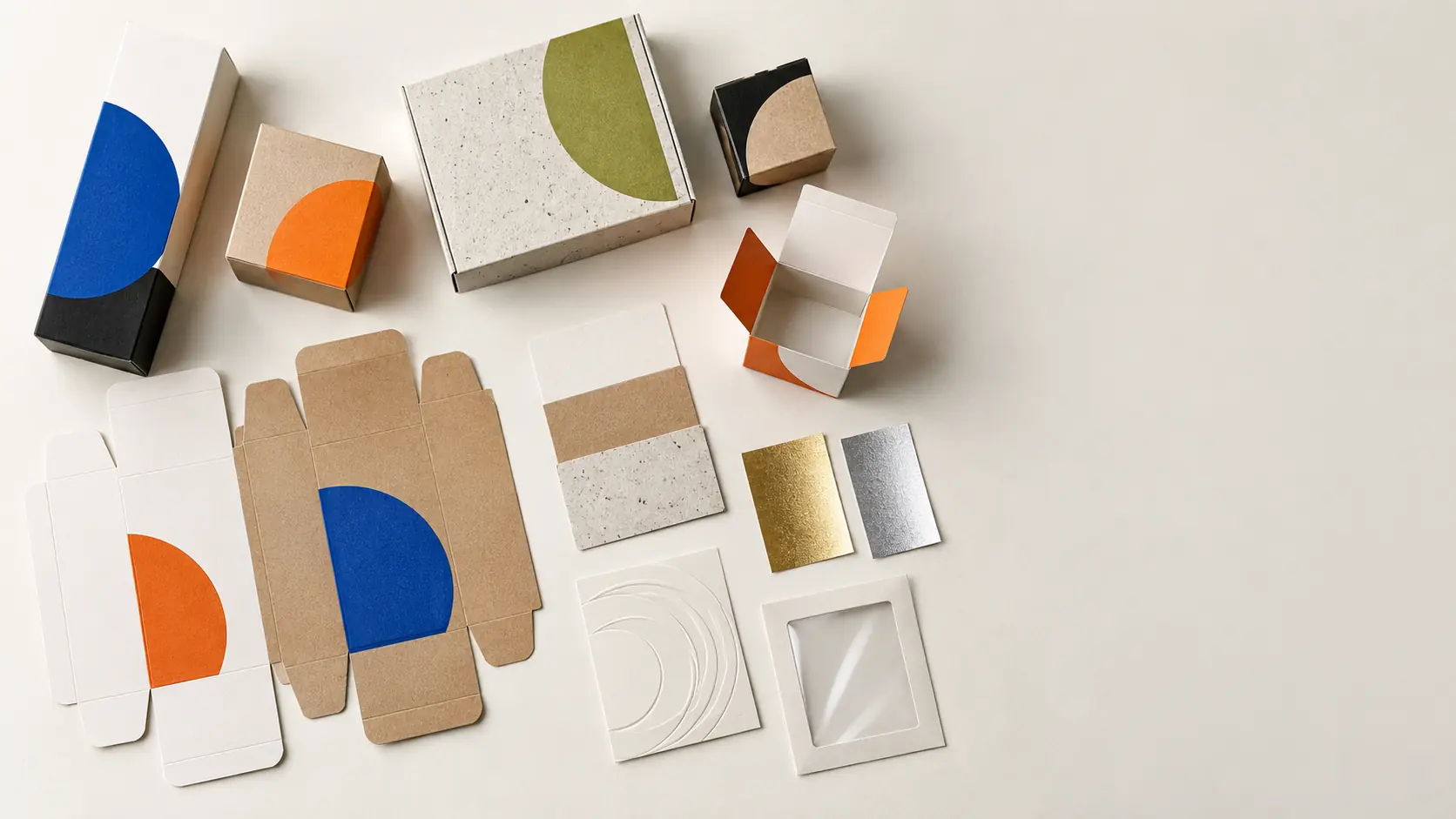
Confirm the internal dimensions, product movement and the way each panel opens and closes.
Review stiffness, fold response, colour and small copy on the chosen paperboard route.
Check foil, relief, varnish, windows or inserts against the live dieline and tolerance.
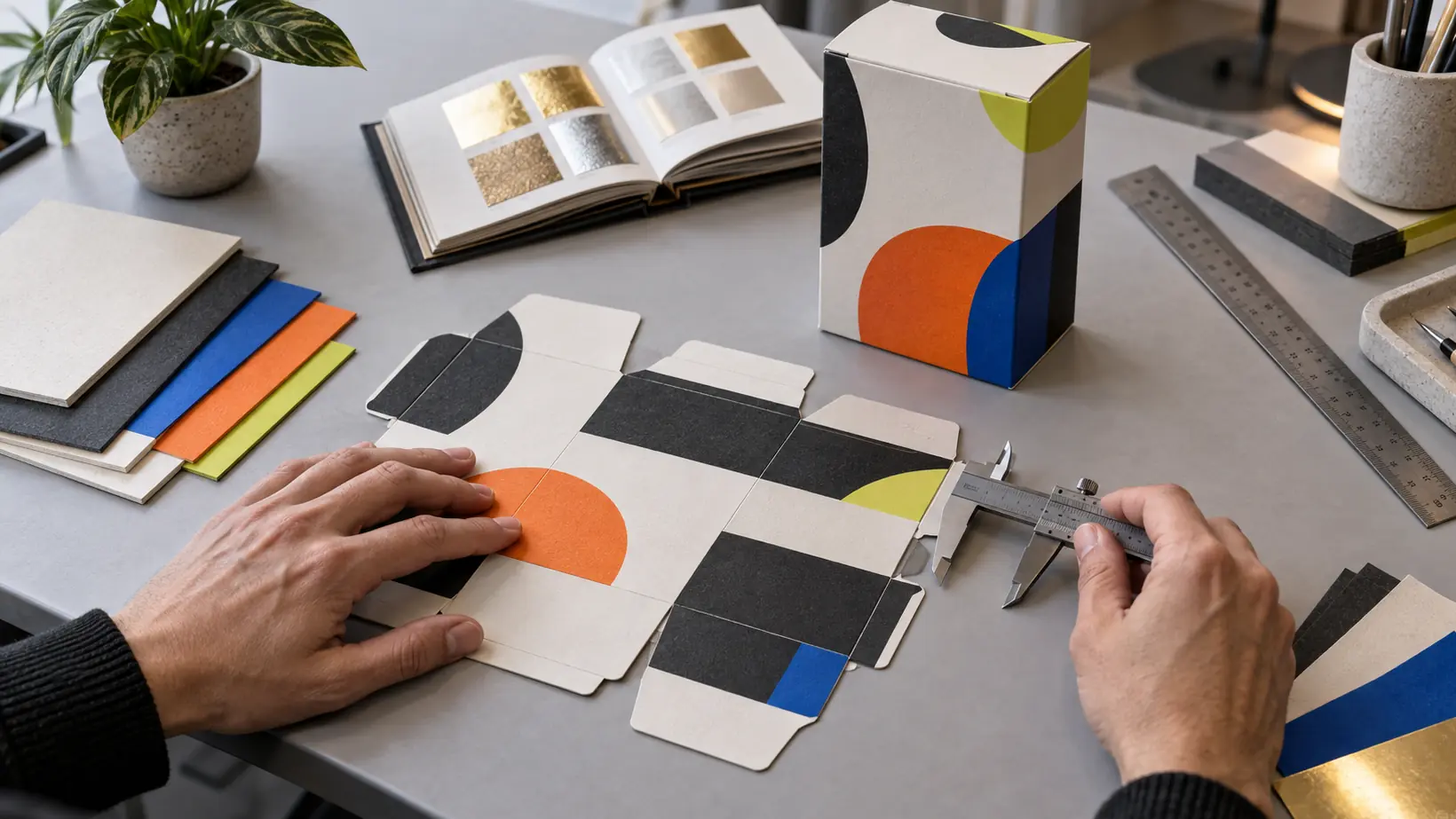
Images are illustrative specification visuals, not client work. The finished result is developed and approved against your product, dieline, board and artwork.
Confirm dimensions, weight, quantity, orientation, packing method and delivery destination.
Select or develop the dieline, board route, closure and any required internal support.
Review fit and opening behaviour with a structural or printed sample where the brief requires it.
Check copy, colour, barcode position and each finishing layer on the approved dieline.
Allow a typical 7–10 working days after the final specification and artwork are approved.
Plan transit separately against packed volume, destination and the required arrival date.
Structure, quantity, timing, print and packing answers for this carton format.
Sleeve and tray cartons create a more considered opening moment than a standard tuck box. The printed outer sleeve carries the brand story while the internal tray presents and protects the product, making the format well suited to gift sets, beauty, fragrance and premium retail.
Gift sets, beauty, fragrance and presentation packs. Final suitability depends on the item dimensions, weight, fragility and the way it will be packed and transported.
Yes. The approved dieline can carry brand colour, product information, barcodes and imagery, with foil, emboss, deboss, spot UV, lamination or windows added where the material and artwork allow.
Yes, where the panel size and carton structure allow. A die-cut aperture can be left open or backed with a clear window patch. Patch material, overlap, glue area, product protection and recycling objectives are confirmed for the specific application.
Gold and silver are the most familiar choices, but hot foil is available in many metallic and pigment colours, including copper, rose gold, red, blue and green, plus selected holographic effects. The final colour and sheen are chosen from physical swatches and remain subject to supplier range and stock.
The minimum order quantity starts at 500 units. Finished size, board, print coverage and finishing requirements are confirmed before the production route is priced.
Typical production lead time is 7–10 working days after the structure, artwork, paperboard and finishes are approved. Structural development, sampling and delivery are additional where required.
No. This page covers folding paperboard sleeve-and-tray formats. Rigid drawer boxes use thicker wrapped board and follow a different construction, cost and supply route.
Paperboard components can often be supplied flat or pre-glued, depending on tray construction and packing needs. The agreed supply format should be tested with the intended assembly process.
The dieline must allow for actual board caliper, print, lamination and manufacturing tolerance. A physical prototype is the most reliable way to confirm sliding resistance and product fit.
Share the product dimensions and quantity now. Board, structure, finishes and add-ons can be refined during the specification review.