foil stamped cartons UK
Hot foil stamping
A heated die transfers metallic or pigmented foil to selected artwork, creating a precise reflective detail.
Foil, embossing, spot UV and lamination should be planned as part of the carton construction—not added at the end as decoration.
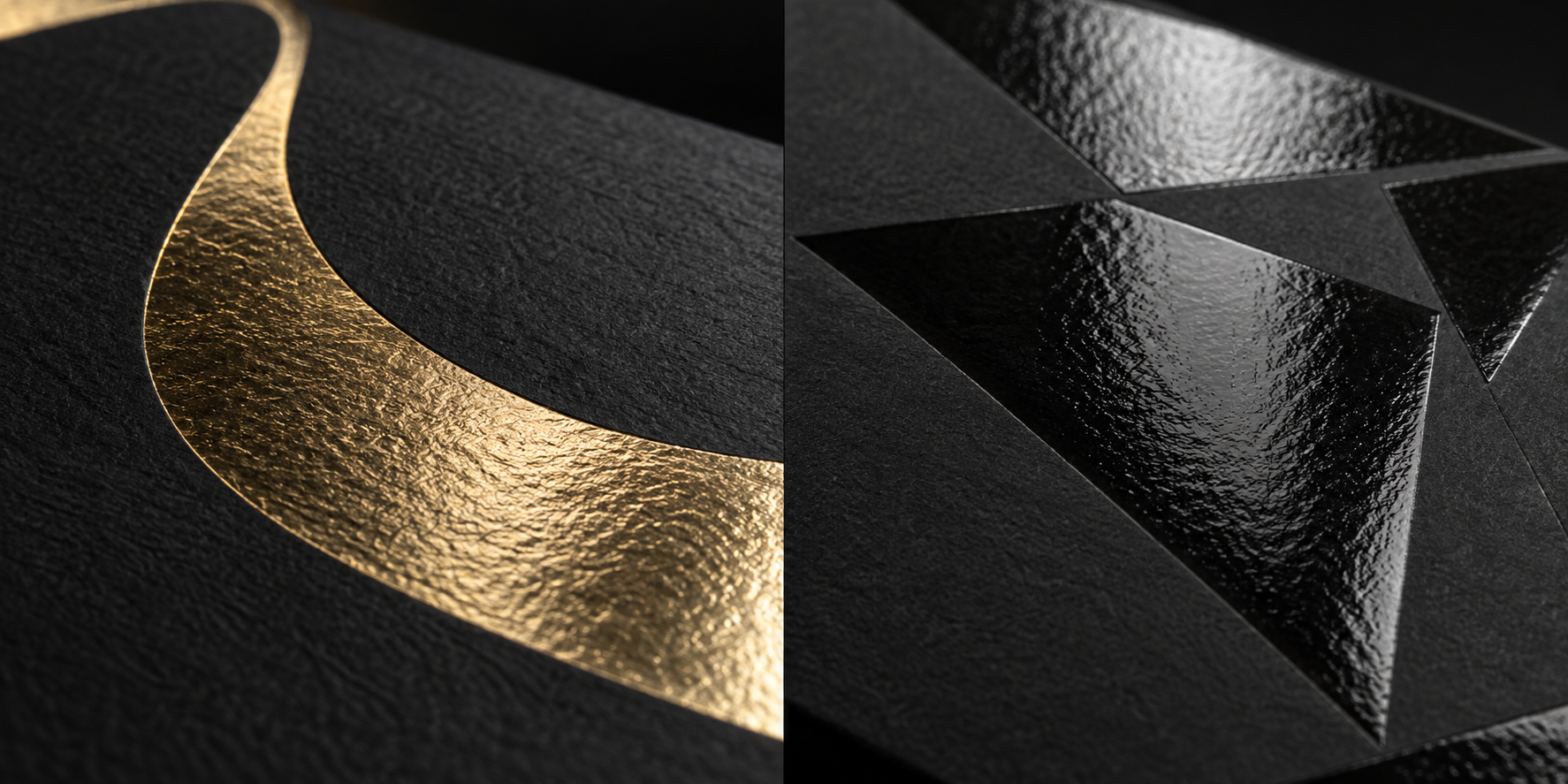
Premium finishes behave differently around folds, edges, fine type and large solid areas. The best result comes from deciding hierarchy first: which element needs reflection, which needs depth and which should remain quiet?
A heated die transfers metallic or pigmented foil to selected artwork, creating a precise reflective detail.
A high-gloss coating is applied to selected areas, often over a matte background, so the detail appears as the pack moves.
A matched die set raises selected artwork above the board surface to create tactile emphasis and shadow.
The selected area is pressed into the board, creating a quieter recessed detail with physical depth.
A protective film creates a low-glare, smooth surface that can make colour and typography feel more restrained.
A high-shine protective film increases reflectivity and can add visual depth to colour and product imagery.
A cut aperture reveals the primary product. Clear film can be added where protection or containment is needed.
Aqueous and other coating routes can support scuff resistance, surface feel and application-specific performance.
The board surface, ink coverage, carton size, crease positions and intended end use can all change the result. Food, healthcare, coding and recycling requirements may also limit which coatings or films are suitable.
A finish sample is useful for judging look and feel, but the final production specification should still be tested against the actual artwork and carton structure.