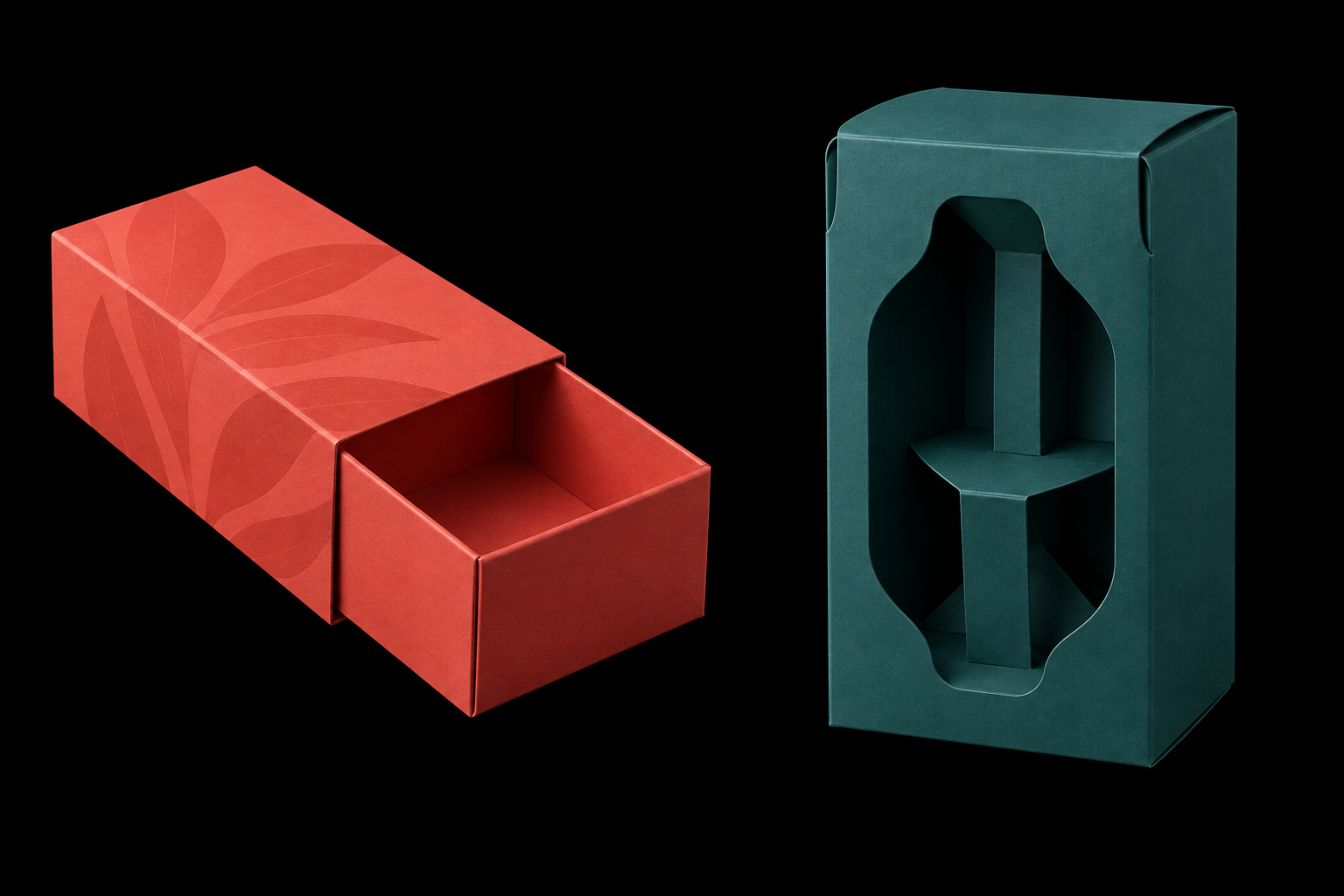
Pre-glued automatic base
Interconnected base panels are glued during manufacture and form the working bottom as the carton body is squared.
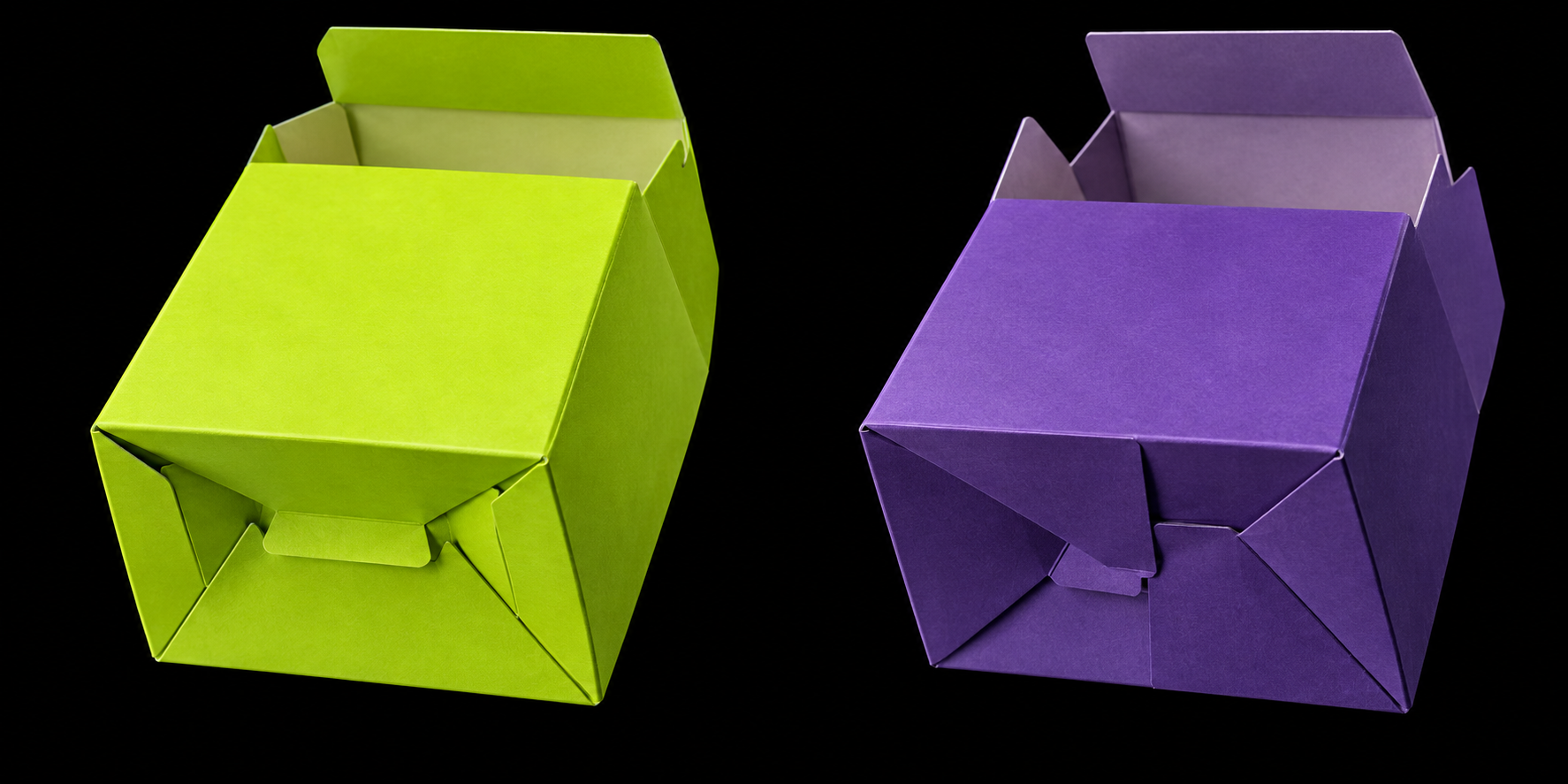
Crash-lock bottom cartons—also called auto-lock bottom boxes—open into shape with the base already positioned. They suit products that need more support than a simple tuck base and packing operations where speed matters.
A fast-erecting carton with a pre-glued automatic base for efficient packing and added support.
A crash-lock bottom carton uses a set of pre-glued base panels that move into position as the flat carton is opened. The automatic base removes a separate manual locking sequence, making it useful where operators need to erect cartons quickly. The finished strength still depends on footprint, board grade, product weight and successful physical testing.
Interconnected base panels are glued during manufacture and form the working bottom as the carton body is squared.
A tuck-top closure keeps filling and opening familiar while the base provides additional support.
Base geometry spreads product weight across a larger connected area than a simple tuck flap.
The box style, board, product and packing process need to work together. These are the advantages to use—and the points to verify before production.
The automatic base reduces assembly steps during packing.
A larger base area supports bottles, jars and other compact products.
Premium print and finishing can be applied without losing practical pack performance.
Test the exact product, board and carton footprint; the term crash-lock does not guarantee a universal weight capacity.
Keep print coatings and finishes out of all manufacturer’s glue zones to protect bond performance.
Confirm erection behaviour after storage because board moisture, grain and heavy surface coverage can affect flatness.
Allow enough internal clearance for the base to open fully without the product catching the folded panels.
Bottles, jars, candles, supplements and gift products. Final suitability is confirmed against the packed product and distribution route.
Stiffness, print response, fold performance and product weight shape the material decision. These are the most relevant starting routes for this structure—not fixed specifications.
Often preferred when bottles, jars or compact products need improved base support and clean panel presentation.
Suitable for premium print where strength, smoothness and a consistent interior appearance are required.
Can be considered for heavier or sustainability-led briefs, subject to structure, print surface and pack testing.
Product-specific combinations to evaluate before opening the complete interactive library.
Adds a controlled surface and handling protection while glue zones remain finish-free.
Creates premium focal detail on the front, side or top panels.
Works on selected areas away from heavy crease intersections and base mechanics.
Can display or locate the product when enough structural board remains around each cut-out.
Click through premium finishing and structural add-ons for crash-lock bottom cartons. Each option shows the visual character, best use and production point to resolve before artwork approval.
Gold and silver foil are shown separately. Foiling is also available in a wide choice of metallic and pigment colours, subject to the selected foil range and stock.
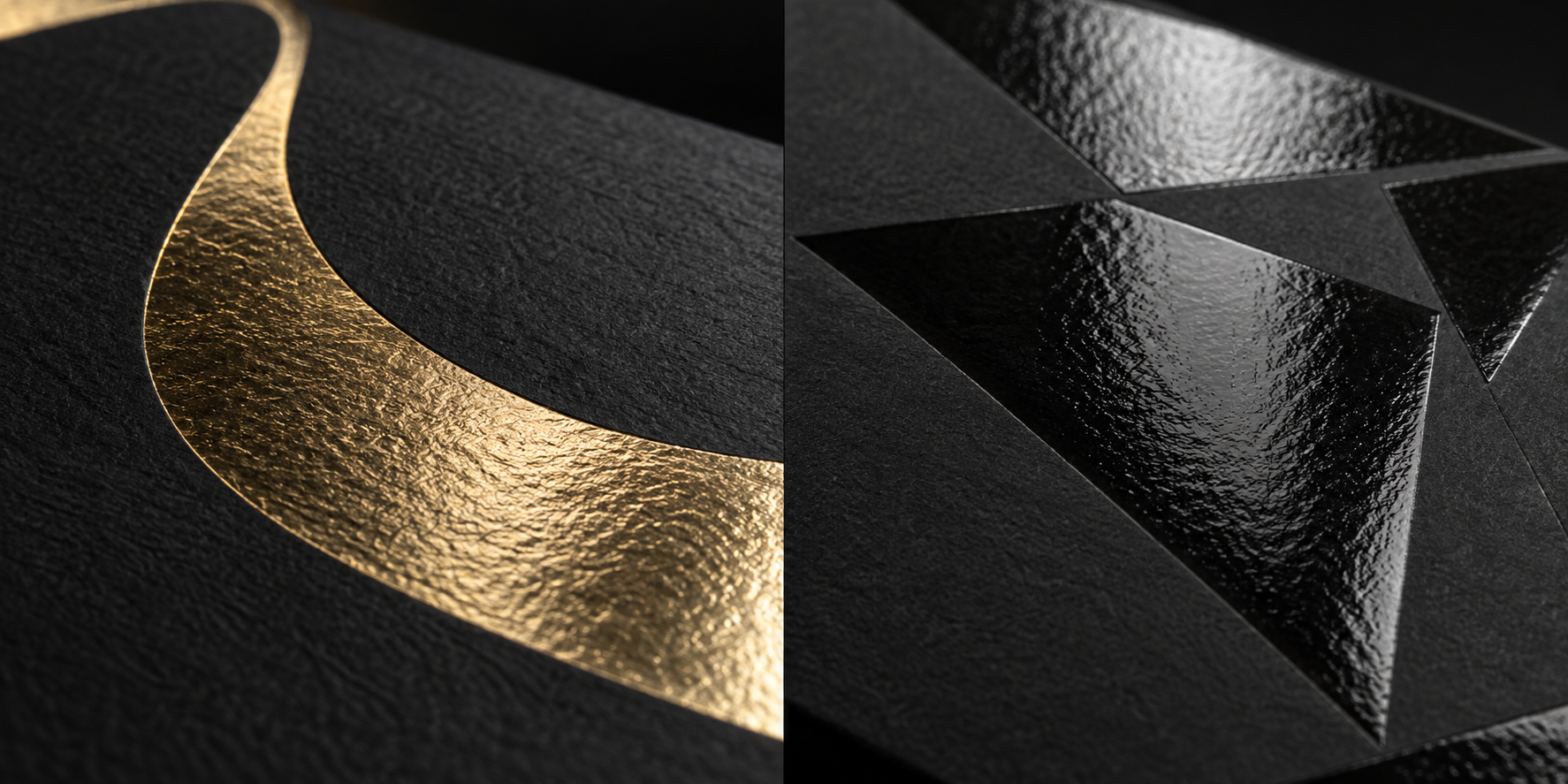
Warm metallic reflection
A heated die transfers gold-coloured foil onto selected artwork, creating a crisp reflective focal point without printing an additional ink colour.
A screen can suggest colour and surface, but fit, fold and finish should be judged against the actual structure. For a crash-lock bottom carton, the approval route can include a plain prototype, printed sample or finish reference.
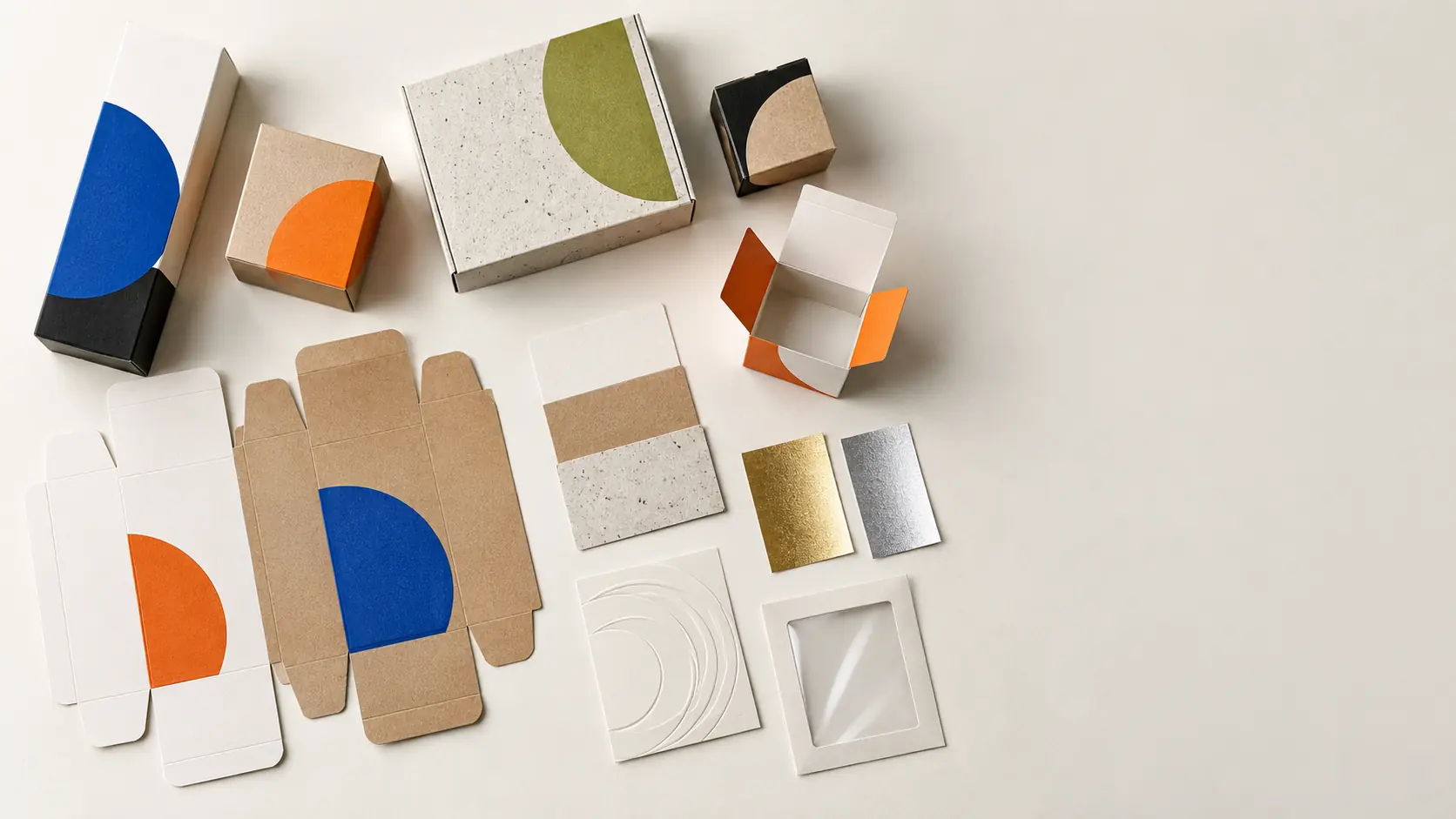
Confirm the internal dimensions, product movement and the way each panel opens and closes.
Review stiffness, fold response, colour and small copy on the chosen paperboard route.
Check foil, relief, varnish, windows or inserts against the live dieline and tolerance.
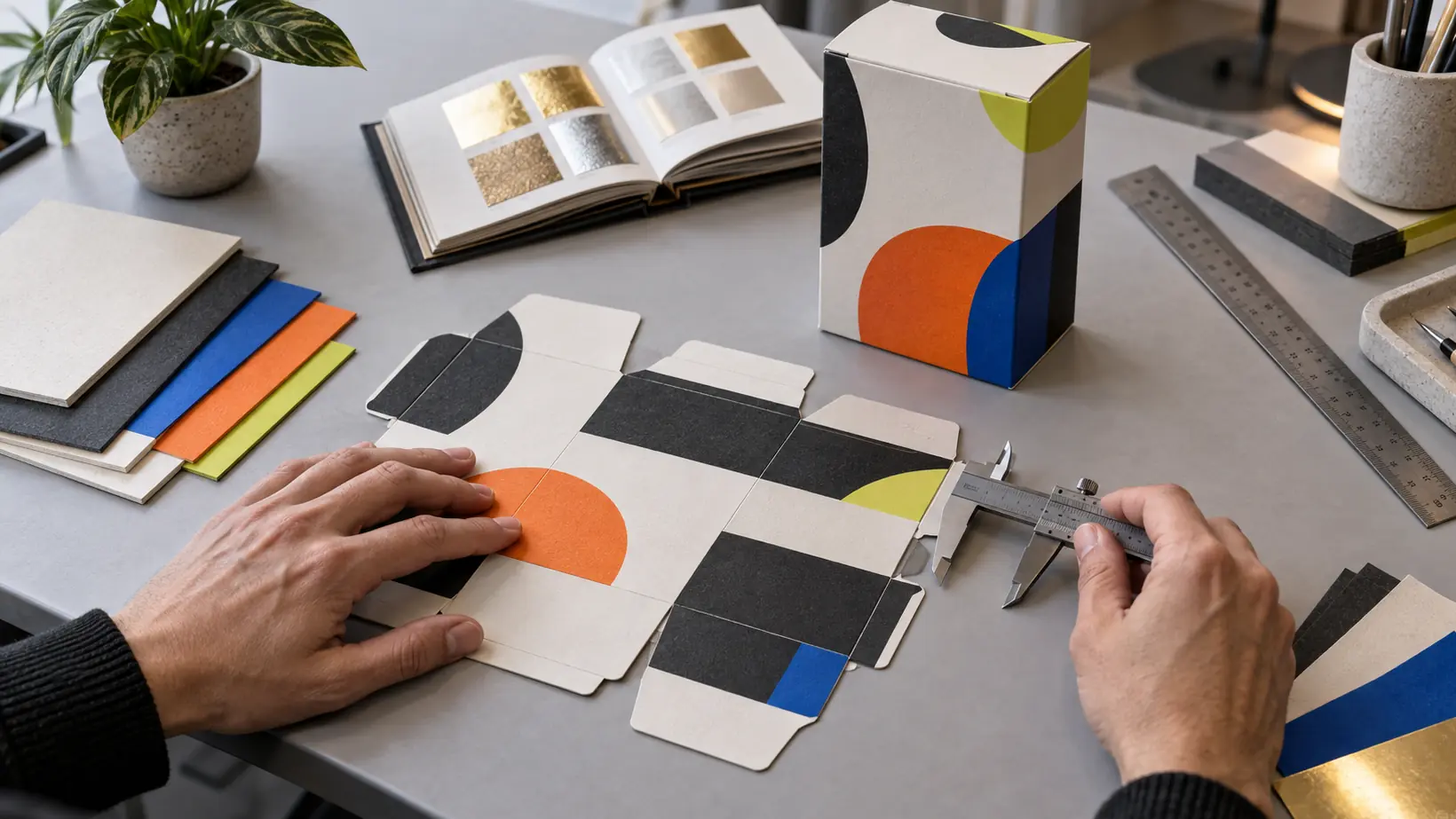
Images are illustrative specification visuals, not client work. The finished result is developed and approved against your product, dieline, board and artwork.
Confirm dimensions, weight, quantity, orientation, packing method and delivery destination.
Select or develop the dieline, board route, closure and any required internal support.
Review fit and opening behaviour with a structural or printed sample where the brief requires it.
Check copy, colour, barcode position and each finishing layer on the approved dieline.
Allow a typical 7–10 working days after the final specification and artwork are approved.
Plan transit separately against packed volume, destination and the required arrival date.
Structure, quantity, timing, print and packing answers for this carton format.
Crash-lock bottom cartons—also called auto-lock bottom boxes—open into shape with the base already positioned. They suit products that need more support than a simple tuck base and packing operations where speed matters.
Bottles, jars, candles, supplements and gift products. Final suitability depends on the item dimensions, weight, fragility and the way it will be packed and transported.
Yes. The approved dieline can carry brand colour, product information, barcodes and imagery, with foil, emboss, deboss, spot UV, lamination or windows added where the material and artwork allow.
Yes, where the panel size and carton structure allow. A die-cut aperture can be left open or backed with a clear window patch. Patch material, overlap, glue area, product protection and recycling objectives are confirmed for the specific application.
Gold and silver are the most familiar choices, but hot foil is available in many metallic and pigment colours, including copper, rose gold, red, blue and green, plus selected holographic effects. The final colour and sheen are chosen from physical swatches and remain subject to supplier range and stock.
The minimum order quantity starts at 500 units. Finished size, board, print coverage and finishing requirements are confirmed before the production route is priced.
Typical production lead time is 7–10 working days after the structure, artwork, paperboard and finishes are approved. Structural development, sampling and delivery are additional where required.
Yes. Both names commonly describe a folding carton with a pre-glued base that moves into place as the carton is erected.
They are normally supplied flat with the side seam and automatic base already glued. Opening the carton squares the body and engages the base.
Potentially, but the exact bottle weight, centre of gravity, carton footprint, paperboard and distribution conditions must be tested. An insert or alternative structure may also be required.
Share the product dimensions and quantity now. Board, structure, finishes and add-ons can be refined during the specification review.